Midsummer (mid-July through August)
The everything-is-open window: full Rim Drive, boat tours in operating seasons, wildflowers in the meadows, and swimmable (briefly) water. Also peak crowds at the main overlooks.
Park Guides · Oregon
The deepest lake in America, in a color blue that doesn't look real.
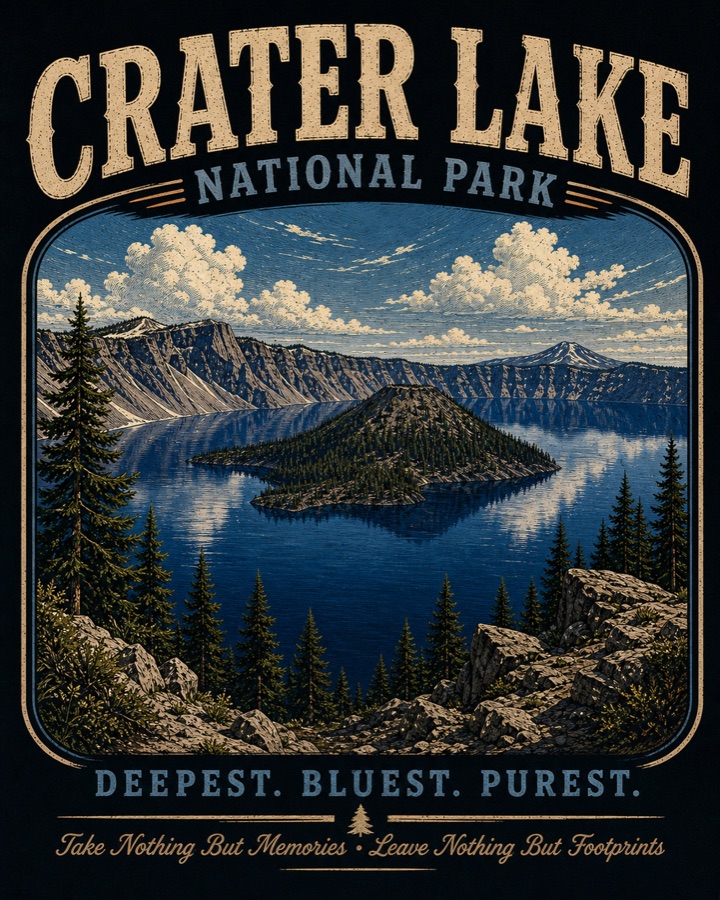
Crater Lake fills the collapsed shell of Mount Mazama, a volcano that erupted about 7,700 years ago, and it is the deepest lake in the United States at 1,943 feet. Fed by nothing but snow and rain, the water is so pure and so deep that it absorbs every color except a blue people genuinely do not believe until they crest the rim.
The catch is snow: the rim collects some 40 feet of it a year, and the park spends more months buried than open. Timing decides everything about a Crater Lake trip, so this guide covers the rim's best stops, the one legal way down to the water, and how to plan around a season that is shorter than most visitors expect.
The stops worth planning a day around.
The 33-mile loop around the caldera with more than 30 pullouts, each offering a different geometry of blue. Budget a half day with stops; the east side is typically the last section plowed and the quietest once open.
The classic straight-down view of Wizard Island, and the rim's favorite sunset perch. The short, steep trail up to the historic fire lookout above it adds a 360-degree panorama for less than a mile of climbing.
The only legal access to the water: 1.1 miles and about 700 vertical feet down switchbacks to a rocky shore where the brave jump into astonishingly clear, astonishingly cold water. Remember the trail is a climb back out at altitude.
A volcano inside a volcano: a cinder cone rising 750 feet from the lake, with summer boat access in seasons when tours operate. Climbing the cone and looking back at the rim inverts the whole park.
The rim's best half-day hike, climbing from Crater Lake Lodge to a summit with the lake below and, on clear days, Mount Shasta a hundred miles south. About 3.5 miles round trip; snow lingers here well into July.
An eerie side canyon of volcanic spires fossilized from the eruption's gas vents, at the end of a quiet spur road. A good option when rim weather closes in.
A 1915 lodge whose back terrace of rocking chairs may be the best-sited porch in the park system. Even non-guests can have a drink or dinner with the entire lake as a backdrop.
For half the year the park is a snow world, and ranger-led snowshoe walks reveal the lake steaming between squalls. It is a completely different park, and it is beautiful.
The logistics that surprise first-time visitors.
Full Rim Drive typically opens fully in early-to-mid July and closes with the first big storms in October or November. The south and west entrances stay open year-round to the rim viewpoint area, but plan a 'full park' trip for midsummer and check current road status before you go.
Cleetwood Cove is the only legal route to the lake. Everywhere else the caldera walls are unstable and off-limits, and rangers do enforce it. The trail is periodically closed for maintenance, so verify it is open if swimming is your goal.
One lodge, a couple of seasonal campgrounds and cafes, limited fuel nearby, and spotty cell coverage. The nearest real supply towns are Klamath Falls and Medford, each over an hour away. Arrive with a full tank and your snacks sorted.
Everything here happens between 6,500 and 8,000 feet. Sunburn arrives faster, hikes feel harder, and afternoon energy fades sooner. Hydrate and pace day one gently.
Calm morning air gives the flattest water and the deepest color, and summer afternoons can stir wind chop or wildfire haze. If photographing the lake matters to you, be on the rim before ten.
Crater Lake Lodge's short season sells out many months in advance. Mazama Village and gateway-town motels are the practical fallbacks, and camping opens progressively as snow melts.
The safety notes rangers repeat for good reason.
Trails like Garfield Peak carry steep snowfields into midsummer, and people in sneakers slide on them every year. If a slope looks icy, it is; turn around or carry traction early in the season.
The caldera edge is crumbly volcanic rock that drops hundreds of feet. Stay behind walls where they exist and back from the edge where they do not, especially for photos and especially with kids.
Going down to the water is optional; coming back up 700 feet at 6,800 feet elevation is not. Allow twice the descent time, carry water, and skip it entirely if anyone in the group has heart or breathing issues.
Summer surface water hovers in the 50s Fahrenheit. The famous rock jump is safe fun for strong swimmers who keep it brief; cold shock is real, so get in, get the photo, get out.
The rim manufactures its own wind, fog, and thunderstorms, and temperatures can swing 30 degrees in an afternoon. Pack a warm layer and shell every single day of the year, and get off exposed points when storms build.
What each season actually feels like on the ground.
The everything-is-open window: full Rim Drive, boat tours in operating seasons, wildflowers in the meadows, and swimmable (briefly) water. Also peak crowds at the main overlooks.
Quieter rim, golden light, crisp air, and usually the year's clearest views once summer fire haze fades. The season can end abruptly with the first storm, so stay flexible.
A snowbound, half-secret park: snowshoe walks, ski tours, and the lake appearing and vanishing between clouds. Only the south and west approaches are maintained, and storms close even those temporarily.
The lake is fully visible while the rim is still half-buried, which photographs beautifully, but expect the east Rim Drive and high trails to be closed. A gamble that often pays off on weekdays.
Independent park-inspired designs from our studio. Park-inspired, never official NPS merch.

Comfort Colors 17173 colors
Quick answers to the questions people actually ask.
Yes, in exactly one place: the shoreline at the bottom of Cleetwood Cove Trail, when the trail is open in summer. The water is extremely cold and astonishingly clear. Everywhere else, entering the caldera is prohibited and genuinely dangerous.
One full day covers Rim Drive with stops, a short hike, and sunset at Watchman. Two days adds Cleetwood Cove or a boat tour and slower time on the lodge porch. It pairs naturally with a southern-Oregon road trip.
Typically from early or mid July until the first lasting snow in October or November, but plow-out varies by snow year. Check the park's current road status page while planning, especially for June and October trips.
Depth and purity. The lake is filled only by snow and rain, with no rivers carrying sediment in, and at 1,943 feet deep it absorbs the rest of the spectrum while scattering blue light back out. On calm mornings the effect looks digitally exaggerated. It is not.
If you accept the terms, absolutely. The rim viewpoint near park headquarters is maintained all winter, ranger snowshoe walks are free and beginner-friendly, and seeing the blue framed in forty feet of snow is unforgettable. Just build in weather slack days.
Conditions, reservation systems, and fees change. Always check the official National Park Service site for current information before your trip. National Park Gift Shop is an independent brand and is not affiliated with, endorsed by, or sponsored by the National Park Service or any government entity.