Spring (March through April)
Peak season for a reason: warm days, possible wildflower blooms after wet winters, and the Joshua trees themselves flowering in creamy clusters. Book camping early and expect entrance lines on weekends.
Park Guides · California
Boulder piles, Dr. Seuss trees, and some of the darkest skies in California.
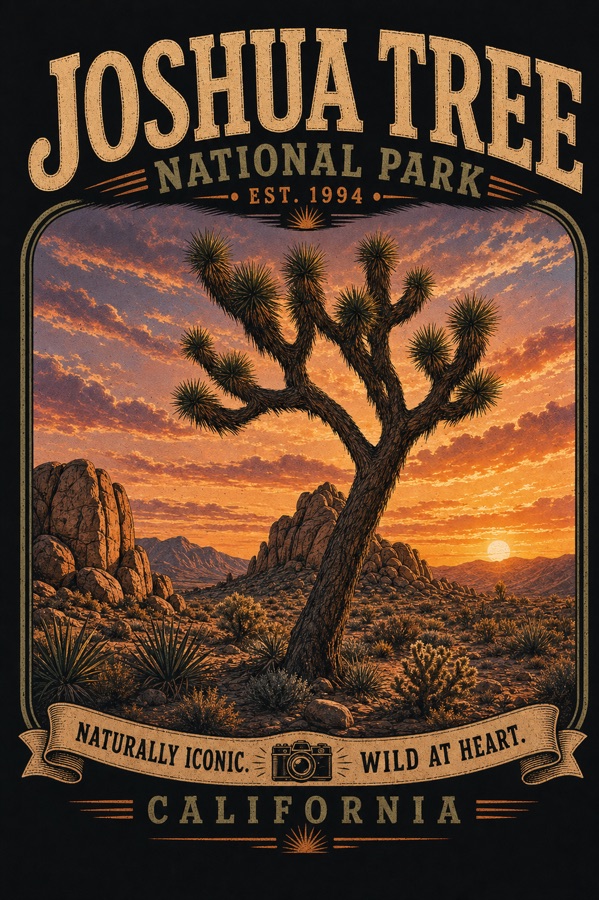
Joshua Tree is where two deserts meet: the higher, cooler Mojave with its namesake spiky trees and mountain-sized granite boulder piles, and the lower Colorado Desert of creosote flats and cactus gardens. The result feels less like a landscape and more like a sculpture park run by a whimsical geologist.
It is also refreshingly easy to enjoy: most icons sit minutes from the road, the scrambling is world-class and optional, and after dark the park becomes one of Southern California's best stargazing spots. The desert still writes the rules, though, and this guide covers both the fun and the fine print.
The stops worth planning a day around.
A one-mile loop inside a rock-walled bowl that cattle rustlers once used as a natural corral. It concentrates everything the park does well — boulders, Joshua trees, secret garden feel — into the single best first stop.
A drive-up overlook at 5,185 feet taking in the entire Coachella Valley, the San Andreas Fault line, and on clear days Mexico's Signal Mountain. Sunset here is the park's grand finale.
A dense stand of teddy-bear cholla glowing gold at sunrise and sunset, right where the two deserts trade places. Walk the short loop, admire from a respectful distance, and read the warnings below before you get artistic with camera angles.
The roadside boulder that actually looks like its name, surrounded by the park's most entertaining scrambling terrain. The Jumbo Rocks area at golden hour, when the granite turns honey-colored, is prime wandering.
A short sandy trail from White Tank reaches a 30-foot granite arch, with the famous heart-shaped boulder a spur away. An easy add-on that photographs far bigger than the effort suggests.
A flat loop past a historic ranch-era water tank that occasionally holds actual water, petroglyph sites, and reliable Joshua tree scenery. One of the best easy walks for spotting bighorn sheep at dawn.
The park's best workout-to-view ratio: three miles round trip and about 1,000 feet up to a summit with 360 degrees of desert basin and range. Winter and spring only, unless you enjoy hiking inside a hair dryer.
Joshua Tree is a certified dark-sky park, and on moonless nights the Milky Way is plainly visible to the naked eye. Pull into any legal roadside or the Cap Rock area after dark, kill the headlights, and give your eyes twenty minutes.
The logistics that surprise first-time visitors.
No taps, no fountains, no services along the park roads. Carry at least a gallon per person per day, more if you are hiking. Fill up and fuel up in Yucca Valley, Joshua Tree town, or Twentynine Palms before entering.
Assume zero coverage inside the park. Download offline maps, tell someone your plan, and do not count on calling for help from a trail. A paper map from the entrance station is not a nostalgia item here.
The West Entrance queue can stretch an hour or more on season weekends. Arrive before nine, or use the north entrance at Twentynine Palms, which usually moves faster and drops you near the cholla garden side.
October through April is prime time: mild days, cold crisp nights, and comfortable hiking. Summer highs regularly pass 100°F, and the park's low shade makes that hotter than the number sounds.
High desert means big temperature swings; a 75-degree afternoon can become a 40-degree night. Stargazers and campers should pack real layers year-round, plus a headlamp with a red mode.
In-park campgrounds are legendary and limited: reservation sites sell out months out for spring, and first-come loops fill by Thursday on good-weather weekends. Gateway towns hold plenty of motels and rentals as backup.
The safety notes rangers repeat for good reason.
Teddy-bear cholla segments detach at the lightest brush and their barbed spines are miserable to remove from skin, shoes, and unfortunately pets. Stay on the garden path, keep kids' hands close, and carry a comb in your pack — it is the field tool for flicking segments off.
Boulder terrain looks identical in every direction and trails braid into social paths, especially around Hidden Valley and the Maze. Note landmarks behind you as you scramble, and stop wandering at dusk; most searches here start with 'we just walked a little way off the trail.'
From May through September, treat hiking as a dawn activity that ends by late morning. Heat exhaustion arrives fast in low humidity because sweat evaporates before you notice it. Water, shade breaks, and turnaround discipline are the whole game.
The granite is grippy and inviting, and every year it lures people two moves higher than they can reverse. Climbing down is always harder than climbing up. If a ledge takes a jump to leave, you have gone too far.
Rattlesnakes wake with the spring warmth and rest in rock shade; look before you place hands and feet. Never touch a tarantula, never feed a coyote, and shake out shoes left outside overnight. Everything here would simply prefer you kept your distance.
What each season actually feels like on the ground.
Peak season for a reason: warm days, possible wildflower blooms after wet winters, and the Joshua trees themselves flowering in creamy clusters. Book camping early and expect entrance lines on weekends.
Summer heat breaks, crowds stay moderate, and climbers return to the granite. Arguably the best all-around window for hiking plus stargazing.
Crisp sunny days, occasional snow dusting the Joshua trees, and the year's longest, darkest nights for astronomy. Pack for below-freezing evenings.
For committed early risers and stargazers only: dawn hikes, midday retreat to air conditioning, and spectacular warm nights under the Milky Way.
Independent park-inspired designs from our studio. Park-inspired, never official NPS merch.

Comfort Colors 17173 colors

Comfort Colors 17173 colors

Comfort Colors 17173 colors

Comfort Colors 17173 colors
Quick answers to the questions people actually ask.
Yes, well. A strong day trip: enter at the West Entrance early, walk Hidden Valley and Barker Dam, picnic at Cap Rock, scramble Jumbo Rocks and Skull Rock, drive to Cholla Cactus Garden, then finish with sunset at Keys View and a half hour of stars before leaving.
Typically late February through April, with big cream-colored flower clusters at the branch tips. Bloom strength varies a lot year to year with rainfall and winter chill, so treat it as a bonus rather than a promise.
It is one of the best easy-access dark-sky parks in the country. The eastern and southern sections are darkest, but even the main corridors deliver a naked-eye Milky Way on clear moonless nights. Check the moon phase before your trip; new moon week is the jackpot.
Dogs are limited to roads, campgrounds, and picnic areas, and cannot go on trails. Between summer car heat, cholla, and rattlesnakes, the desert is rough on pets; if hiking is the plan, arrange boarding in the gateway towns.
The West Entrance near Joshua Tree town is closest to the famous Mojave-side sights but has the longest lines. The North Entrance at Twentynine Palms is usually faster, and the South Entrance off Interstate 10 works well if you are coming from the Palm Springs side and want the cholla garden early.
Conditions, reservation systems, and fees change. Always check the official National Park Service site for current information before your trip. National Park Gift Shop is an independent brand and is not affiliated with, endorsed by, or sponsored by the National Park Service or any government entity.